Ubud Palace Dance Performances
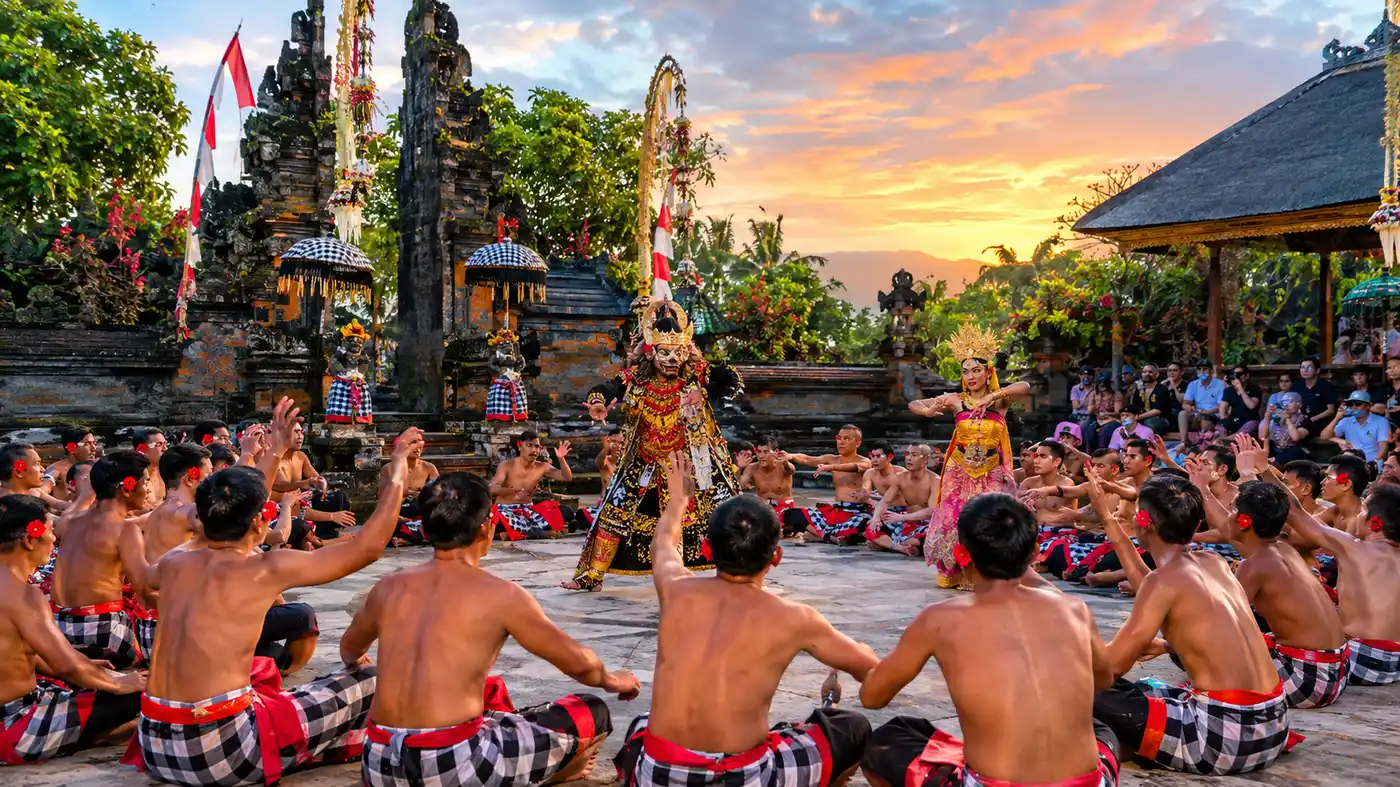
Walk past the corner of Monkey Forest Road and Jalan Raya Ubud around 6:30 in the evening, and the scene is unmistakable. Exhaust fumes from idling scooters drift past the stone gates, blending with the sweet clove scent of kretek cigarettes and sandalwood incense burning on the sidewalk. Through the grand entryway, the courtyard of Puri Saren Agung is already glowing under low floodlights, and you can hear the resonant metallic clatter of bronze keys as the musicians test their instruments. Attending an evening ubud palace dance has been a ritual for travelers since the 1930s, when Western artists first convinced local royalty to share these ceremonial traditions with outside visitors.
The experience is undeniably popular and draws steady crowds every night of the week. Still, sitting three yards away from a live gamelan orchestra while costumed dancers enact centuries-old Hindu epics against a backdrop of carved volcanic tuff remains one of the easiest ways to encounter Bali's classical performing arts. Whether you are hunting for specific information on the weekly rotation or wondering how early you need to arrive to snag a front-row seat, this guide breaks down everything you need to know before you hand over your cash at the palace gate.
Book your kecak dance ubud experience:
The Setting: Inside Puri Saren Agung
Puri Saren Agung sits directly at the central crossroad of Ubud, acting as the spiritual and physical anchor of the town. Built mostly during the early 1800s under the rule of Ida Tjokorda Putu Kandel, the royal compound served as the official seat of government for the local kingdom. While modern descendants of the royal family still live in private courtyards toward the back of the property, the outer compound remains wide open to the public during the day for wandering, and at dusk it turns into an open-air theater.
The performance takes place in the central courtyard against the dramatic backdrop of the Kori Agung, a towering ceremonial stone gate flanked by fierce guardian statues draped in checkered black-and-white poleng cloth. There is no elevated wooden stage here. The dancers perform directly on the stone pavers, framed by potted orchids, offering baskets, and two flickering brass oil lamps. You sit on red plastic banquet chairs arranged in tight semi-circles around the stones, with latecomers often relegated to standing on the raised stone pavilions along the perimeter.
Pro tip: Aim for the second row of plastic chairs directly facing the stone gate. The front row places you so close to the heavy bronze gamelan gongs that your ears will ring for an hour afterward, while the second row gives you better sightlines above the dancers' feet.
Acoustics in the courtyard are loud and raw. The sound of the gamelan orchestra bounces off the surrounding brick walls and ancient thatched roofs, creating an intense, physical wall of percussion that hits you right in the chest. It feels immediate and unpolished compared to dances staged in modern tourist theaters down south in Nusa Dua.
The Weekly Ubud Palace Dance Schedule
One confusing thing for first-timers is that the palace does not present the exact same program each night. The venue hosts different local dance troupes from Ubud and surrounding villages, each specializing in a specific style or classical narrative. If you simply ask for an ubud palace dance show, you might get delicate court choreography on Tuesday and vigorous demon battles on Wednesday.
Many travelers arrive looking specifically for a kecak dance ubud palace performance, but the royal palace courtyard focuses heavily on gamelan-accompanied repertoires rather than vocal chanting. If you are desperate for the famous monkey chant, you will usually find it hosted down the street at community temples instead. Checking the wider Ubud Kecak dance schedule will reveal several open-air temples within a ten-minute walk that host massive chanting choirs on alternate nights.
Shows at the palace start promptly at 7:30 PM and run for roughly 75 to 90 minutes. Below is the typical weekly rotation, though seasonal temple ceremonies and royal family obligations occasionally shuffle the schedule without much warning.
| Day | Featured Performance | Primary Focus | Start Time |
|---|---|---|---|
| Monday | Legong Gong Kebyar | Energetic, modern 20th-century gamelan styles paired with classical female court dance. | 7:30 PM |
| Tuesday | Ramayana Ballet | Dramatized storytelling depicting Prince Rama, Sita, and the demon king Ravana. | 7:30 PM |
| Wednesday | Legong & Barong Dance | Graceful palace storytelling followed by the comedic, protective mythological lion. | 7:30 PM |
| Thursday | Legong Trance Dance | Spiritual repertoire featuring young performers entering light altered states. | 7:30 PM |
| Friday | Barong Dance Ubud Palace | The eternal struggle between good (Barong) and malevolent chaos (Rangda). | 7:30 PM |
| Saturday | Legong Dance | The quintessential classical Balinese court dance known for complex finger movements. | 7:30 PM |
| Sunday | Legong Mahabandana | Vibrant ensemble performance featuring intricate choreography and large percussion troupes. | 7:30 PM |
The standard ubud palace dance schedule stays fairly consistent throughout the dry season from April to October. During the rainy months, outdoor arrangements depend entirely on whether the afternoon storms clear out by dusk.
What to Expect During an Ubud Palace Show
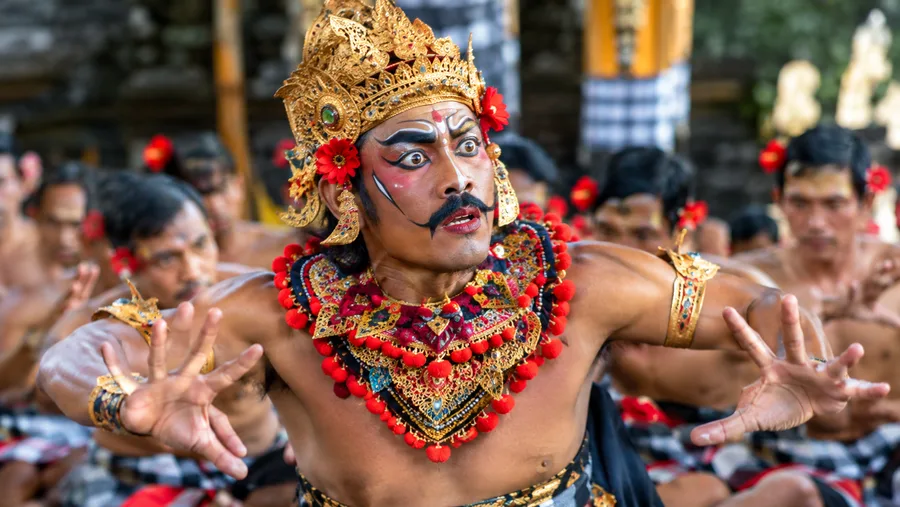
Balinese dance is unlike Western theater or standard Southeast Asian folk styles. It relies on intense, angular body positions, isolation of the fingers, sharp neck movements, and dramatic facial expressions. The eyes dart back and forth in rapid motions known as seledet, syncing tightly with sudden syncopated strikes on the kendang drums. If you watch closely, you will see the lead drummer directing the entire flow of the story with sharp taps of his bare hand on the drumskin.
Costumes worn during any balinese dance at ubud palace are heavy and ornate. Performers wrap themselves in yards of stiff prada cloth decorated with genuine gold leaf, cinched tightly with long fabric sashes. Massive gilded leather headpieces called gelungan are crowned with fresh frangipani blossoms, which shake with every snap of the dancer's head. By the end of an hour under the humid tropical air and stage lights, the performers are visibly drenched in sweat, yet their posture never slips.
Depending on which night you choose, you will see a collection of distinct classical forms:
- Legong Keraton: Originally created in the early 19th century as court entertainment for the kings, performed by young girls using fast footwork, fluttering fans, and intricate eye movements.
- Barong and Kris Dance: A dramatic piece where male dancers enter a spiritual frenzy, turning sharp daggers toward their own chests while protected by the benevolent spirit of the Barong.
- Oleg Tamulilingan: Also known as the Bumblebee Dance, this playful duet depicts the courtship of two insects buzzing among garden blossoms, showcasing fluid movement alongside masculine martial steps.
- Topeng Dance: Masked performances where solo actors switch characters rapidly, portraying wise ministers, clumsy village buffoons, and fierce royal warriors to tell historical chronicles.
Before the lights go down, staff pass out small printed leaflets explaining the plot of the evening's performance. Keep this paper handy. The storylines follow complex Hindu narratives derived from the Mahabharata or regional historical tales, and without the program notes, keeping track of who is an ogre, who is a prince, and who is an enchanted golden deer gets tricky fast.
Book your kecak dance ubud experience:
Ubud Palace Ticket Prices and How to Buy
Securing an ubud palace ticket is straightforward, but it can catch unprepared visitors off guard. As of recent months, the standard entrance fee for the evening performance sits at 100,000 IDR per person, which translates to roughly $6.50 USD. Children under ten years old are often let in for free or half price, depending on seat availability and the mood of the door warden.
You do not need to book your seat through an expensive agency three weeks ahead of your trip. In fact, booking through third-party intermediaries often results in inflated prices or confusion about which courtyard you are actually visiting. Ticket counters directly outside the palace gates begin selling physical paper slips around 5:00 PM every afternoon.
Note: Ticket touts congregate in large numbers on the sidewalk along Jalan Raya Ubud starting mid-afternoon, asking passing tourists if they want dance passes. Most are legitimate local commission sellers, but buying directly from the palace ticket desk inside the gate ensures you receive a printed program slip and pay the exact standard rate.
For Indonesian travelers searching for harga tiket kecak dance di puri ubud, it is worth clarifying again that while you will find occasional kecak dance di ubud palace programs during cultural festivals, the standard 100,000 IDR royal palace ubud dance ticket is almost always for classical Legong, Barong, or Ramayana productions. You can discover a wider variety of specialized sacred performances by checking out our guide to Balinese dance performances in Ubud.
- Payment method: Cash is king at the gate; bring exact change in Indonesian Rupiah because credit card terminals frequently lose connectivity or are simply not accepted.
- Refund policy: Tickets are non-refundable once purchased, even if tropical rain delays or forces the show to relocate into an adjoining covered hall.
- Street sellers: If you buy from an independent seller outside, ensure the physical ticket has the official Puri Saren stamp on the reverse side.
- Combined touring: Day visits to the palace grounds are completely free, so do not let anyone charge you an admission fee before the evening ticket counters open at 5:00 PM.
Practical Tips for Attending a Royal Palace Ubud Dance
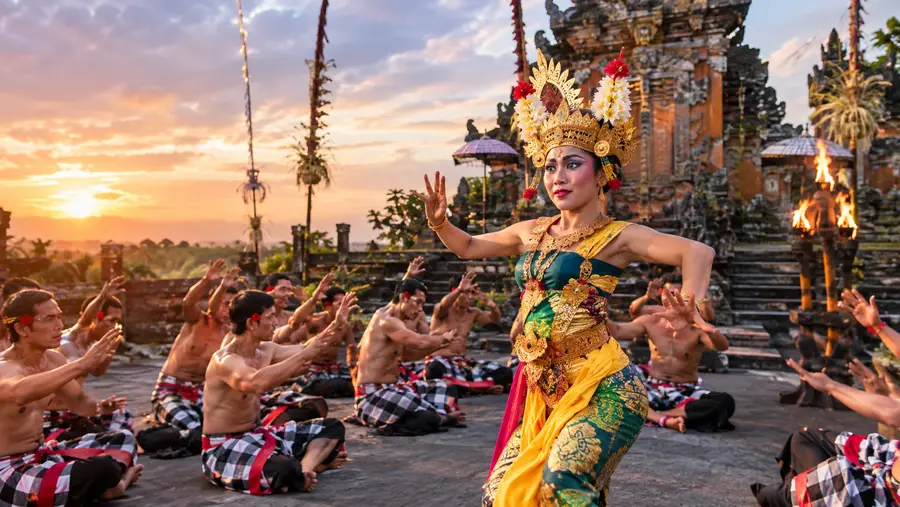
Attending an ubud palace performance requires minimal preparation, but a few small adjustments will make your evening far more comfortable. The stone courtyard traps ambient heat long after the sun goes down, and sitting shoulder-to-shoulder with 150 other people on non-breathable plastic chairs gets warm within fifteen minutes.
First, get there early. The gates open for seating around 6:45 PM, and by 7:10 PM, every single prime seat in the front three rows will have a bag, water bottle, or human sitting on it. If you stroll in at 7:25 PM, you will likely be standing on your feet on the side walkways or peering between the shoulders of taller travelers from the back row.
Dress comfortably, but show respect. Although the palace does not enforce a strict sarong and temple sash dress code for evening cultural performances, this is still a functioning royal residence with deep spiritual importance to the community. Sleeveless tank tops, extremely short beach shorts, or swimwear are poor form. Lightweight linen pants, short-sleeve button-downs, or casual dresses are ideal choices that keep you cool while respecting local customs.
Mosquitoes can be relentless once the sun drops behind the palms. Because the courtyard sits open to the night air and features damp stone walls and ornamental gardens, packing a small bottle of insect repellent is an absolute lifesaver. Spray your ankles and elbows before taking your seat so you are not swatting bugs while trying to appreciate the delicate finger movements of the Legong.
Dinner logistics are simple. Because the show wraps up around 8:45 PM or 9:00 PM, you have plenty of time to eat afterward. Several casual warungs and famous local eateries sit within a five-minute stroll of the front gate, including spots serving babi guling or modern plant-based fare on Jalan Goutama. Just be prepared to fight the initial surge of pedestrian traffic spilling out onto the main road the moment the final gong chimes.
Frequently Asked Questions about ubud palace dance
What time should I arrive to get a good seat at the palace?
Gates open around 6:45 PM for the 7:30 PM show. Arriving between 6:50 PM and 7:00 PM guarantees you a seat in the first two or three rows with unobstructed sightlines.
Can you watch the Kecak dance at Ubud Palace?
The royal palace rarely stages Kecak dance shows. The palace focuses on classical Legong, Barong, and Ramayana ballet backed by a live gamelan orchestra. For Kecak, head to nearby temples like Pura Dalem Taman Kaja or Padangtegal.
Do I need to wear a sarong to see the dance performance?
No, a temple sarong and sash are not required for the ticketed evening dance shows at Puri Saren Agung. However, respectful modest clothing that covers your shoulders and knees is appreciated by local staff.
What happens if it rains during the performance?
If light rain occurs, the performance usually continues. In the event of heavy downpours, the musicians and dancers typically relocate under the shelter of the adjoining open-sided royal pavilion so the show can proceed without cancellation.
Can I take photos and videos during the show?
Yes, photography and video recording are allowed throughout the performance. Just make sure to turn off your camera flash, as sudden bright bursts can distract the dancers and blind nearby audience members.
Quick Reference
- Tickets: 100,000 IDR cash at the gate
- Start time: 7:30 PM nightly (arrive by 6:50 PM)
- Location: Puri Saren Agung, central Ubud crossroad
- Duration: roughly 75 to 90 minutes
- Dress code: smart casual, modest attire recommended
Book your kecak dance ubud experience:
The Bottom Line
There are certainly more intimate village performances scattered across the rice paddies of Gianyar, and serious arts aficionados often seek out secluded temple ceremonies far from the tour buses. But for accessibility, historical ambiance, and pure musical power, spending an evening inside the stone walls of Puri Saren Agung remains hard to beat. Bring cash for your ticket, show up forty minutes before the opening beat, and let the resonant crash of the gamelan transport you into old Bali.
Read more about kecak dance ubud.