Balinese Dance Performances in Ubud
The sun drops behind the palm trees around six in the evening, and Ubud shifts into a different gear. Heavy bronze gamelan gongs start echoing from temple courtyards tucked behind mossy brick walls along Jalan Raya Ubud. If you want to experience authentic balinese dance ubud stages offer something genuine almost every single night, far removed from sanitized resort showcases.
Every performance is rooted in village ritual and Hindu mythology. The dance is not just entertainment for travelers passing through central Bali. To the dancers and musicians living in the surrounding banjars, it is an offering to the gods, a lesson in morality, and a disciplined community craft passed down through three or four generations. Deciding which show to attend can feel overwhelming because ticket sellers wave flyers on every sidewalk corner between Monkey Forest Road and Hanoman Street. This guide covers the major dance forms, where to see them, realistic ticket costs, and how to get the most out of an evening under the frangipani trees.
Book your kecak dance ubud experience:
The Core Dance Styles You Will See in Ubud
Ubud is the cultural heartland of Bali, which means you have access to forms of dance drama that rarely get performed in the southern beach towns. Each style carries a completely different mood, tempo, and storytelling structure.
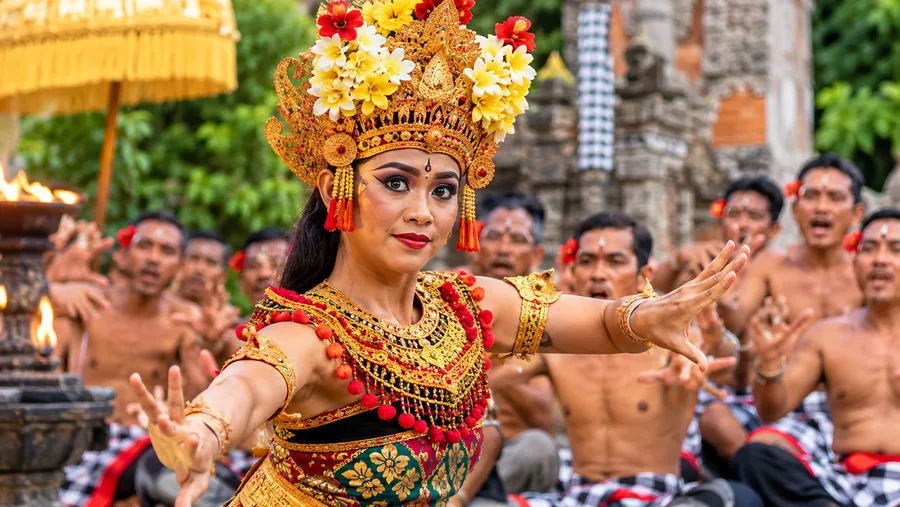
The Legong is probably the most famous classical court dance. It was originally created in the early nineteenth century as entertainment for royal palaces. Two or three young girls perform intricate choreographies wearing gold-leafed brocade sarongs, heavy frangipani headdresses, and holding ornate fans. What makes a legong dance ubud performance striking is the sheer isolation of movement. A dancer will keep her torso rigid while her eyes snap rapidly to the left and right in a technique called seledet. Her fingers curve backward at impossible angles, trembling to the frantic pinging of the metal gangsa keys. The performance feels royal, stiff, delicate, and strangely hypnotic.
If you prefer drama and theatrical creatures, look for a barong dance ubud show. The Barong is a shaggy, lion-like mythological beast operated by two men inside a heavy costume decorated with mirrors, gilded leather, and real animal hair. He represents cosmic order and pure good. His eternal rival is Rangda, a terrifying demon queen with pendulous breasts, fangs, and a tongue that rolls down to her waist. When Rangda appears onstage, the atmosphere turns heavy. The plot always features a troupe of warriors who attempt to attack Rangda with wavy keris daggers, only to be placed under her hypnotic spell and turned against themselves. They thrust the sharp daggers directly into their own bare chests without piercing their skin. Indonesian tourists often ask for recommendations to nonton barong dance dan kecak dance di ubud because the two dances together show the spiritual breadth of the island.
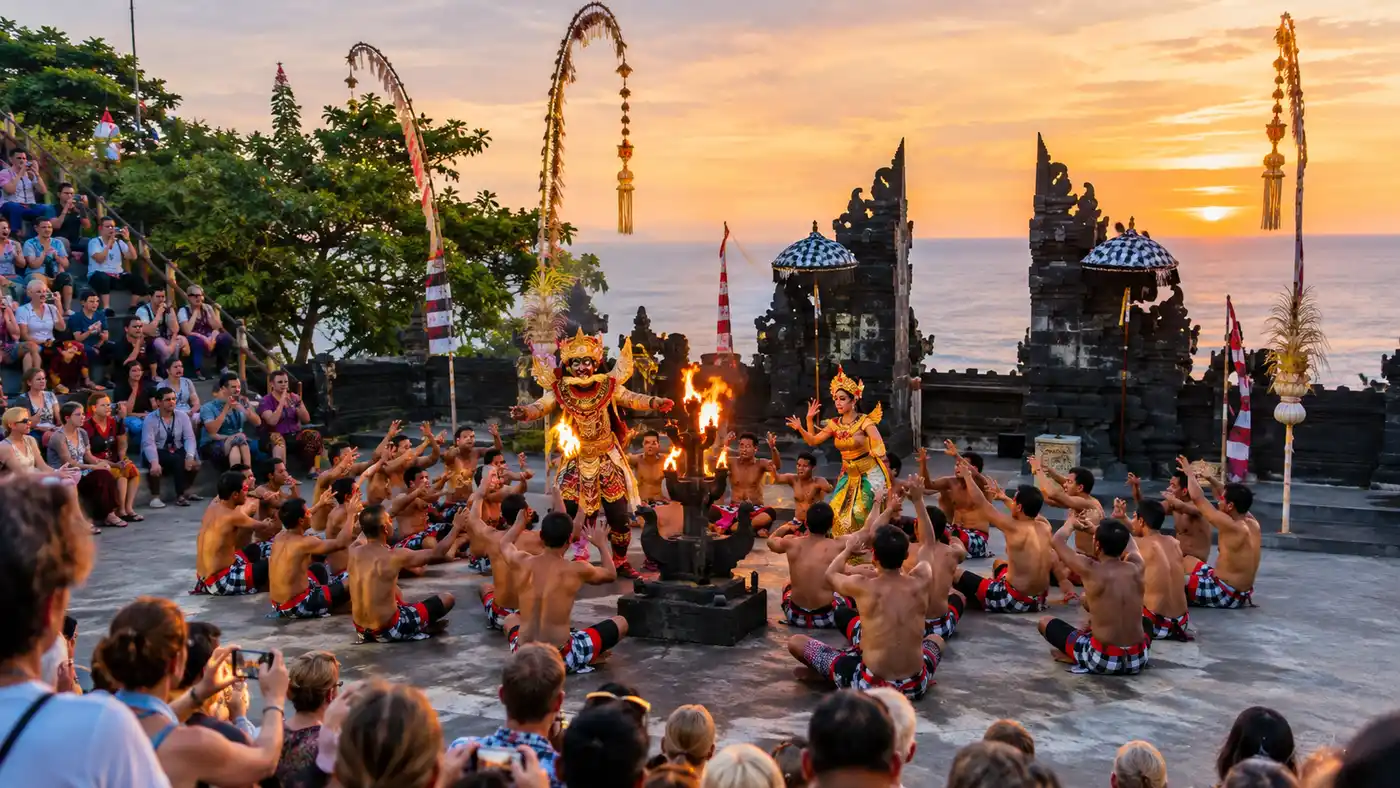
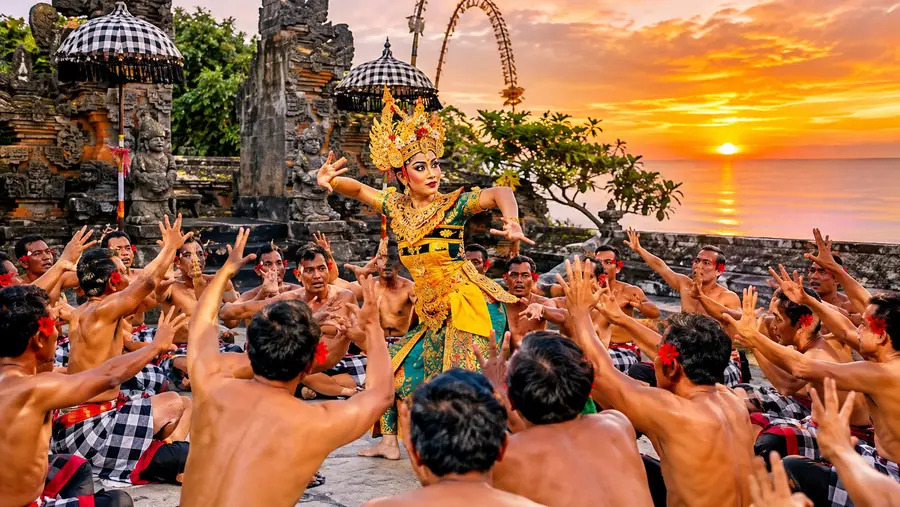
Then comes the Kecak. Unlike every other traditional dance ubud features, the Kecak does not use an instrumental gamelan orchestra. The sound comes entirely from a seated choir of fifty to seventy men wearing checkered cloths. They sway, throw their hands into the air, and chant interlocking patterns of rhythmic shouts that sound like percussion instruments. The performance tells episodes from the Hindu Ramayana epic, culminating in a dramatic battle where white monkey general Hanuman kicks glowing coconut husks across the brick courtyard. European travelers often look for this spectacle danse ubud because the fire and raw vocal power create an electric setting after dark.
Topeng is another style worth your evening. It is a masked dance drama where performers switch characters by putting on carved wooden masks representing ministers, clowns, kings, and common village fools. While the high-status characters move with refined elegance and speak in archaic Kawi, the masked clowns talk to the audience in plain Indonesian or broken English, cracking dry jokes about village politics, traffic on Jalan Raya, or tourist quirks.
Top Venues for a Balinese Dance Show in Ubud
You do not need to sit inside an air-conditioned auditorium to see a bali dance show. Ubud uses living temples, old royal courtyards, and museum pavilions as its stages. Sitting on a stone step five feet away from a bronze gong makes the experience visceral.
Puri Saren Agung, known simply as Ubud Palace, sits dead center in town. The palace pavilion provides an ornate backdrop of carved volcanic tuff stone, gilded wooden doors, and ancient banyan trees. Attending one of the nightly Ubud Palace dance performances is the most convenient choice for first-time visitors because the gates sit directly across from the art market. The palace hosts Legong, Barong, and court dances on a rotating weekly schedule. It gets packed early, so arriving thirty minutes before the musicians sit down is essential if you want an unobstructed view.
Pro tip: Grab dinner around 5:30 PM near your chosen venue. Most evening shows start at 7:30 PM, and finding an open table nearby after the performance ends means competing with several hundred other hungry travelers spilling onto the dark sidewalks.
Pura Dalem Puri in Peliatan, a village just east of central Ubud, offers a much more rustic setting. Peliatan is legendary for producing some of the greatest gamelan masters and Legong soloists in Balinese history. Shows held here feel like genuine temple ceremonies rather than commercial spectacles. The seating is modest, often plastic chairs set on dirt or paving stones, but the quality of the drumming and the precision of the dancers often surpasses what you see in the center of town.
If you prefer an outdoor arena framed by lit torches, check out the various community temples that run evening programs. Figuring out where to watch Kecak dance in Ubud usually comes down to whether you want a temple courtyard like Pura Dalem Taman Kaja or a quiet pavilion tucked out among the rice fields off Jalan Pengosekan. For travelers searching for a quiet ubud spectacle away from the palace crowds, the lotus pond amphitheater at Saraswati Temple provides an unmatched setting, with hundreds of pink water lilies framing the stone carvings of the goddess of wisdom.
Schedule and Ticket Costs Across Ubud Venues
Nearly all formal shows in Ubud follow a fixed admission rate. You do not need to haggle. Whether you buy a paper slip from a street vendor outside the palace or pay at the gate entrance, the price for a standard ubud dance show is almost universally between 100,000 and 150,000 Indonesian Rupiah per adult, which comes out to roughly $7 to $10. Children under ten are usually free or half-price.
Every performance starts punctually between 7:00 PM and 7:30 PM and runs for roughly sixty to seventy-five minutes. Below is a breakdown of what you can typically see across town throughout the week.
| Dance Style | Primary Venue | Typical Start | Ticket Price (IDR) |
|---|---|---|---|
| Legong Mahabandana | Ubud Palace | 7:30 PM Daily | 100,000 |
| Kecak Fire & Trance | Pura Dalem Taman Kaja | 7:30 PM Wed & Sat | 100,000 |
| Barong & Keris Dance | Pura Dalem Puri (Peliatan) | 7:30 PM Sunday | 100,000 |
| Women's Gamelan & Dance | Balerung Stage Peliatan | 7:30 PM Friday | 150,000 |
| Topeng Mask Drama | Museum Puri Lukisan | 7:00 PM Saturday | 100,000 |
| Ramayana Ballet | Ubud Palace Courtyard | 7:30 PM Tuesday | 100,000 |
Note: Almost all dance venues in Ubud are open-air. If a sudden rainstorm hits, performances either shift under covered side pavilions or pause for fifteen minutes until the downpour clears. Cancellations are rare.
Book your kecak dance ubud experience:
What to Expect During an Ubud Dance Performance
If you have never attended a balinese dance performance, prepare yourself for an acoustic shock. Balinese gamelan music is loud, fast, and metallic. It is completely different from the slow, meditative gamelan played in central Java. Drummers use their bare hands to slap complex syncopated rhythms on double-ended drums called kendang, dictating every twist and sudden eye shift of the dancer on stage.
The sensory details stand out immediately. The smell of burning sandalwood incense drifts through the air, mixed with sweet night-blooming jasmine and the damp scent of volcanic rock. The performers wear costumes made of heavy woven fabric stamped with real gold leaf, decorated with fresh frangipani blossoms pinned through their hair knots. It feels ancient and intimate.
Here is what you should keep in mind before you walk through the temple gates:
- Dress code: Unlike entering an active inner temple sanctuary during prayers, you do not always need a full sarong and sash for a public evening show, though wearing modest clothing that covers your shoulders and knees is respectful.
- Seating arrangements: Seating is usually first-come, first-served on basic plastic chairs, stone ledges, or bamboo mats laid on the ground.
- Performance pamphlets: The entrance fee includes a folded paper synopsis explaining the acts of the story, which you should read before the drums start so you can follow the plot without getting lost.
- Photography rules: Non-flash photography is allowed everywhere, but standing up in the middle of an aisle to block the people behind you is frowned upon.
- Children and volume: The loud cymbals and scary demon masks like Rangda can genuinely frighten toddlers, so sit near an outer aisle if you need to make an easy exit.
The pacing of a traditional dance might feel strange at first. Stories do not resolve in tidy Western three-act structures. Battles between good and evil often end in a cosmic stalemate. The Barong never truly destroys Rangda, and Rangda never eradicates the Barong. They balance each other, representing a worldview where light and dark must coexist forever.
Tips for Getting the Best Seats and Enjoying the Show
Getting a memorable seat at an ubud dance performance requires very little effort, but small mistakes can leave you staring at the back of someone's iPad for an hour. The most popular venues fill their front rows twenty minutes before the opening gong strikes.
When you walk along the main street in Ubud during the afternoon, local banjar men will offer you printed flyers showing daily schedules. Buying a ticket from these street sellers is perfectly safe. They are local village representatives who earn a tiny commission that supports their neighborhood group. You pay the exact same price as you would at the door, and the ticket guarantees your entry.
- Arrival timing: Arrive 35 minutes early if you want a front-row seat at Ubud Palace or Saraswati Temple, especially between June and August.
- Seat positioning: Pick a seat slightly off-center to give your camera a clear angle past the front incense burners and offering baskets.
- Insect repellent: Apply mosquito spray generously before sitting down, because temple gardens near ponds are active mosquito feeding grounds at dusk.
- Rain preparedness: Carry a compact umbrella or poncho in your daypack, as open courtyards have limited shelter during sudden tropical squalls.
I find that smaller community stages like Pura Dalem Taman Kaja or the village pavilions in Peliatan offer a richer evening than the palace. The palace has stunning architecture, but the sheer volume of tour groups can make it feel crowded. At a neighborhood temple stage, you are sitting alongside local kids watching their older cousins play the drums, which brings the whole cultural tradition alive in an effortless way.
Frequently Asked Questions about balinese dance ubud
What is the most popular Balinese dance to watch in Ubud?
The Kecak Fire Dance and the Legong Dance are the two most popular styles for visitors. Kecak is famous for its sixty-man vocal choir and dramatic fire stunts, while Legong showcases delicate court choreography, stunning eye movements, and elaborate golden headdresses.
Do I need to book Ubud dance tickets in advance?
No, you do not need to book weeks ahead. You can easily buy tickets on the morning of the show from official ticket desks near the Ubud Palace, from street vendors along Jalan Raya Ubud, or directly at the temple gate thirty minutes before the performance begins.
Can children attend Balinese dance performances?
Yes, children are welcome at all venues. Keep in mind that gamelan music is quite loud and masked characters like Rangda or the keris dagger trance dancers can be intimidating for very young children.
What should I wear to a traditional dance show in Ubud?
Smart-casual, modest clothing is ideal. While a temple sarong is not strictly required for dance shows hosted in outer courtyards, covering your shoulders and upper thighs shows basic respect for the sacred temple grounds.
How long does an Ubud dance performance usually last?
Most shows run between 60 and 75 minutes without an intermission. They start promptly at 7:00 PM or 7:30 PM, ending before 9:00 PM, giving you plenty of time to enjoy a relaxed dinner afterward.
Quick Reference
- Ticket price: 100,000 to 150,000 IDR per person
- Start times: 7:00 PM or 7:30 PM nightly
- Show duration: 60 to 75 minutes
- Best venues: Ubud Palace, Pura Dalem Taman Kaja, Peliatan
- Booking: Buy at gate or afternoon street sellers
Book your kecak dance ubud experience:
My Take: Is an Ubud Dance Show Worth an Evening?
Watching a dance performance in Ubud is one of the few tourist experiences that still feels directly tied to the everyday life of the island. The dancers you see executing razor-sharp finger movements onstage were likely working in a local warung, carving wood, or teaching school earlier that afternoon. When the gamelan strikes up, the entire courtyard locks into an artistic lineage that has survived colonialism, tourism booms, and rapid modernization. Skip the hotel dinner buffets with watered-down five-minute cultural interludes. Pay the hundred thousand rupiah, take a plastic chair in a centuries-old courtyard, smell the burning incense, and let the drums vibrate through your chest for an hour. It is worth every single rupiah.
Read more about kecak dance ubud.